Sports Card Grading vs Pokemon TCG: Five Things That Change the Math
More collectors are crossing over in 2026 than at any point in the hobby's history. Sports collectors picking up Pokemon after seeing six-figure Charizard sales. Pokemon collectors touching rookie autos after watching Victor Wembanyama's Topps Chrome Superfractor trade at $2,775. Both groups assume the grading rules translate cleanly. Several of them do not.
The PSA 10 sticker is the same. The centering standard is the same. The $79.99 Regular tier fee is the same. But what kills a grade, what drives the premium, and whether the submission math works are different enough that a collector optimizing for one hobby can lose money misapplying those instincts in the other.
Population Sizes Differ by Orders of Magnitude
This is the biggest shock for sports collectors coming to Pokemon, and for Pokemon collectors going the other direction.
High-production base rookie cards in basketball and baseball can flood the PSA registry with tens of thousands of PSA 10 copies in their first year. That is a commodity. A graded label adds almost nothing over raw when that many gem-mint copies exist, because any buyer who wants a PSA 10 version can find one immediately. Victor Wembanyama's 2024-25 Donruss Optic Prizm base markets at $6.50 per September 2026 catalog data. The all-in grading cost of roughly $115 (PSA Regular at $79.99 plus shipping and supplies) is 17 times the raw card price. The grade will not produce that.
Sports auto parallels are the opposite story. Numbered short-prints are produced in quantities of 25, 50, or 99. Most collectors do not submit them all, and a PSA 10 on a Wembanyama numbered auto is genuinely scarcer than a raw copy. That is where the sports grading premium actually lives.
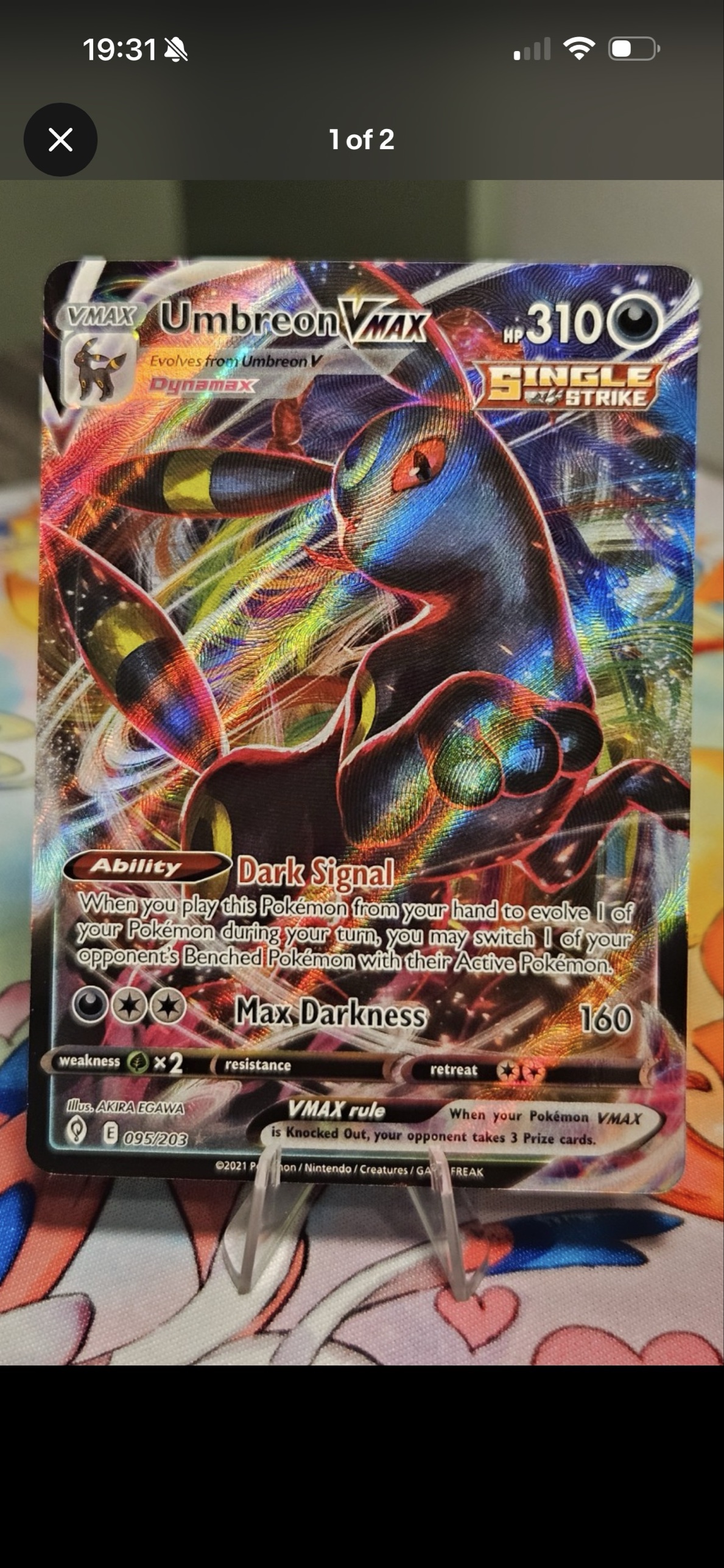
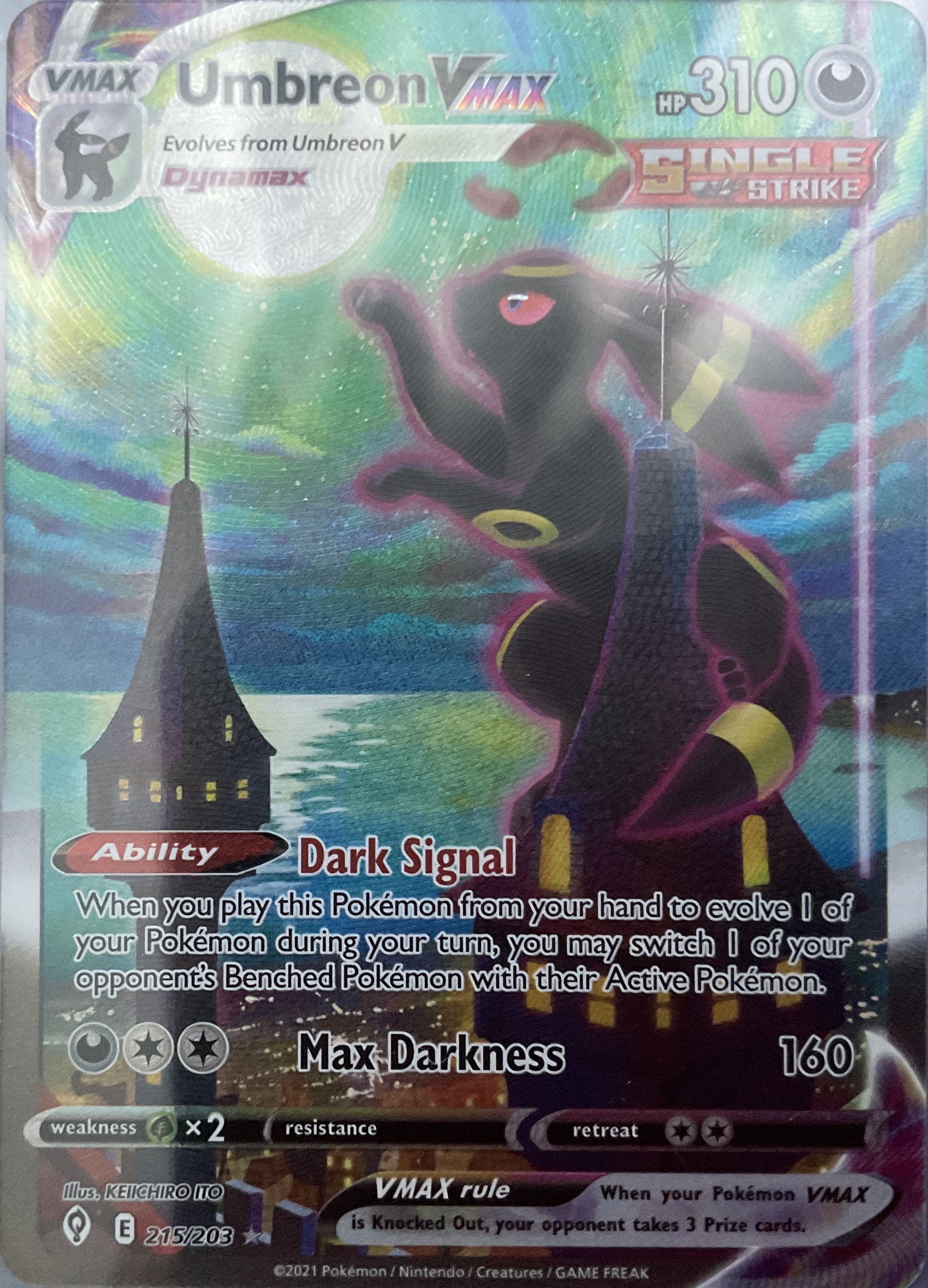
Pokemon chase variants reach scarcity without an autograph. The Umbreon VMAX Alternate Art Secret from Evolving Skies markets at $2,380.34 versus $28.63 for the standard Umbreon VMAX from the same set. The Alt Art population ceiling is set by the pull rate and by which collectors choose to grade, not by a fixed print number. It stays low.
Where the PSA 10 Premium Actually Lives
The multiplier between raw price and PSA 10 price is how collectors calculate grading ROI. That multiplier is not distributed evenly within either hobby.
In sports, the premium collapses for base cards and concentrates at the auto and numbered parallel tier. A $5 base raw card graded PSA 10 might sell for $8. A $500 numbered auto graded PSA 10 can sell for 5x to 10x that, because the graded label preserves scarcity that a raw copy cannot. The premium is about the scarcity, not the grade.
In Pokemon, the premium concentrates at the chase variant tier, but it does not disappear from mid-range cards the way it does in sports. Charizard XY Evolutions markets at $313, and the PSA 10 version commands a meaningful premium over raw because the Charizard demand is structural, not speculative. The character has driven collector demand for nearly 30 years. A collector holding a PSA 10 is holding the best copy in a market with genuine ongoing demand.
Cooper Flagg's Topps Chrome RC #251 markets at $189.99 as of September 2026. That is real money, but it is a bet on player development. If Flagg develops into a franchise player, that card is worth 5x in three years. If he peaks as a good starter, it holds flat or declines. Shohei Ohtani's 2018 Bowman Platinum at $124.31 is a proven outcome, but even there the premium is constrained by how many gem-mint copies were submitted early in his career.
Surface Risk Runs in Different Directions
Sports cards and Pokemon cards fail grading at the surface for different reasons.
Topps Chrome and Panini Prizm cards show every micro-scratch on their silver foil backgrounds. Print lines embedded during the printing process appear under bright illumination and cause no-grade or PSA 9 outcomes that look like handling damage. Vintage cardstock (pre-1980 baseball) carries paper quality issues: yellowing, paper loss, humidity wrinkling. Memorabilia cards with jersey windows introduce a third problem: the embedded fabric creates an uneven card plane.
Pokemon's dominant surface failure is holo scratching. The metallic foil on holo and reverse holo cards picks up handling marks that look clean to the naked eye and show clearly under the grader's loupe. Special Illustration Rares and etched rares have surface texture that can register as "surface damage" under strict grading conditions even when the card came fresh out of the pack. Pokemon white-bordered vintage cards from 1999 to 2002 also scuff on the border in ways that are difficult to see until the card is under magnification.
One surface failure both share: print lines in foil. It is a manufacturing defect on both sides, and neither company credits the factory. PSA and CGC both dock accordingly.
The transfer of surface-inspection skill between hobbies is partial. A collector trained to hunt print lines on Topps Chrome will find them on Pokemon foil cards too. A sports collector who thinks he reads condition well on glossy non-foil cards is going to underestimate holo scratch risk on Pokemon until the first unexpected PSA 9 teaches them otherwise.
Free · No account
Grade your first card free.
No account, no download, no waiting. Photograph the front and the back and get the overall grade back in about a minute.
or get the app


Centering Is Judged Identically, But Shows Differently
PSA applies the same 60/40 front, 75/25 back centering threshold across sports and TCG cards. The standard does not change. What changes is how visible the misalignment is at a glance.
Sports cards with sharp white borders and no bleed art show off-center immediately. A 1989 Topps rookie at 56/44 is obvious to anyone in the room. That visibility makes sports collectors pre-screen centering aggressively before submission.
Modern Pokemon cards are designed with art that runs toward the border and rich full-bleed illustrations that draw the eye away from the frame. A Special Illustration Rare can look roughly centered by feel and come back a PSA 9 because the actual printed frame is at 58/42. The art obscures what the ruler reveals.
This does not mean Pokemon collectors should be less careful. It means eye-judgment transfers poorly between card designs. Measure the frame, not the art. The standard is the same; the visual feedback is not.
The Submission Decision Points in Different Directions
The break-even math is the same on both sides: the graded price at the expected grade must exceed the raw value plus the all-in grading cost. With PSA Regular at $79.99 plus shipping and supplies landing near $115 total, the card needs to clear roughly $115 above its raw value just to not lose money.
What differs is the underlying question you are answering before you submit.
For sports cards, you are betting on a human being. Cooper Flagg's Chrome RC is worth grading if the next three seasons go well and there is no cost-effective way to hold the raw card to find out. A proven outcome like an Ohtani prospect card is safer but has less upside. And the math on base non-auto rookies almost never works at $79.99 regardless of grade. That is the skip: base modern non-auto sports cards priced under $200 raw do not clear the break-even bar at today's PSA Regular floor. Hold them raw or route them to CGC Bulk at $17 if you grade at all.
For Pokemon, you are betting on a character and a variant tier. Charizard demand has held for nearly 30 years; submitting a clean Charizard Evolutions is a different risk profile than submitting a Tier 1 rookie's base card. The skip is different too: common and uncommon modern SV-era cards have no population ceiling and no lasting PSA 10 premium. The graded supply will always exceed demand at any realistic price point.
The grading decision frameworks in our full ROI guide and the best cards to grade in 2026 apply to both categories, but the inputs are different.
Frequently Asked Questions
Do PSA graders apply different centering standards to sports vs Pokemon cards?
No. PSA uses the same 60/40 threshold on the front and 75/25 on the back regardless of card type. The standard is identical. What changes is how obviously a borderline card shows the misalignment: sports cards with sharp white borders make off-center more visible at a glance than Pokemon cards with full-bleed art.
Is the PSA premium higher on sports cards or Pokemon cards?
It depends entirely on tier. Base sports cards have nearly zero PSA 10 premium because the populations are enormous. Numbered sports autos have very high premiums. Pokemon chase variants (Alt Arts, SIRs) show consistent premiums with lower population ceilings than mass-market sports base cards. For the top 1% of either category, the raw numbers are comparable: Umbreon VMAX Alt Art at $2,380 and Wembanyama Topps Chrome Superfractor Auto at $2,775 are similar orders of magnitude.
Can I mix sports cards and Pokemon cards in one PSA submission?
Yes. PSA processes them in the same queue at the same tier pricing. No premium or penalty for mixing. You pay per card at whichever service level you choose.
Which category has better PSA 10 rates for well-selected cards?
Both depend on pre-screening. Pokemon SIRs and Alt Arts pulled fresh and handled correctly have strong gem-mint rates. Topps Chrome autos in a well-protected case have strong gem-mint rates. What depresses PSA 10 rates for both categories is submitting cards that were handled before the collector considered grading them, which is more common in sports because base cards often circulate before their premium is recognized.
Should I pre-grade both types with an app before submitting to PSA?
Yes, for the same economic reason on both sides. The grading decision framework applies to any card: if the expected grade at your realistic condition assessment does not clear the all-in cost, pull it before you pay the fee. At PSA Regular's $79.99 floor, a pre-submission scan that catches one likely PSA 9 in a 10-card order saves the entire submission cost.
Is a modern sports base card or a modern Pokemon base card more worth grading?
Neither, at PSA Regular pricing. A $5 to $20 base card from either category cannot clear a $115 all-in break-even at a realistic graded premium. The only base cards that pencil out at current PSA pricing are already expensive raw, or have a specific collector reason to grade (completing a graded run, high-value sealed case for display). For low-value cards from either hobby, CGC Bulk at $17 with a 25-card minimum is the only tier where the math can work.
Written by
Marcus ReevesLead Grading Editor, ZeroPop
Marcus has been collecting and grading trading cards since the late 1990s, with a focus on Pokemon, vintage baseball, and modern basketball. He leads ZeroPop's grading research, runs the editorial team's PSA, BGS, and CGC submission tests, and writes the cost and turnaround tracking that powers the app's ROI calculator.
Free · No account
Know your grade before you submit.
ZeroPop scans your cards and gives instant sub-grades for corners, edges, surface, and centering. PSA, BGS, and CGC estimates included. Free to start.
or get the app
Keep reading
CGC vs PSA for Pokemon Cards in 2026: Real Numbers, Real Verdict
PSA's economy tiers are paused, cheapest open at $50. CGC Bulk runs $17. Full cost breakdown and market premium comparison for Pokemon collectors in 2026.
Grading GuidesBest Cards to Grade in 2026: Top ROI Picks
The 12 cards most worth grading in 2026 across Pokémon, baseball, football, basketball, and MTG. Ranked by PSA 10 premium and grading-cost ROI.
Grading GuidesIs My Card Worth Grading? The Decision Framework
A practical framework for deciding whether to grade your cards. Covers the break-even math, common traps, and the AI pre-grading approach.
Grading Costs & PricingPSA Grading Cost 2026: What Every Open Tier Charges Now
PSA grading costs in 2026 after the Value tier pause: the $79.99 Regular floor, Express at $149.99, hidden shipping fees, and the real break-even math.