CGC vs PSA for Pokemon Cards in 2026: Real Numbers, Real Verdict
Before mid-2026, the CGC vs PSA question for Pokemon was mostly about brand premium and patience. Then PSA paused all four Value tiers on June 2, raising its cheapest available submission from $21.99 to $50. That single move changed the math for most Pokemon collectors. The answer today is not what it was a year ago.
Current Pricing: What You Actually Pay
PSA (as of June 2026, sourced from the PSA backlog guide):
| Tier | Price/card | Turnaround | Status |
|---|---|---|---|
| Value Bulk | $21.99 | N/A | Paused since June 2 |
| Value | $25 | N/A | Paused since June 2 |
| Value Plus | $30 | N/A | Paused since June 2 |
| Value Max | $40 | N/A | Paused since June 2 |
| Economy | $50 | 45 to 60 days | Open |
| Regular | $79.99 | 30 to 45 days | Open |
| Express | $100 | 15 to 20 business days | Open |
| Super Express | $150 | 10 to 15 business days | Open |
PSA tied Value's return to clearing the backlog to 5 million cards. The optimistic estimate from June 2026 pointed at late 2026 or early 2027. Watch PSA's own backlog tracker for the current number rather than relying on any snapshot, including this one.
CGC (as of August 2026, sourced from the cheapest grading comparison):
| Tier | Price/card | Minimum cards | Declared value cap | Turnaround |
|---|---|---|---|---|
| Bulk | $17 | 25 | $500 | 150 working days |
| Economy | $20 | None | $1,000 | 90 working days |
Collectors Club members get 10% or 20% off depending on tier. CGC raised prices twice in 2026 and both increases are already in those numbers.
The gap between the cheapest CGC tier and the cheapest PSA tier is now $33 per card, not $3. That gap is the whole comparison.
Market Premium: What the Labels Actually Sell For
PSA 10 still earns the highest price for Pokemon cards. For desirable modern cards, a PSA 10 typically sells at 5 to 20 times the raw card value. A CGC Pristine 10 on the same card sells at roughly 80% to 90% of that PSA 10 price, based on secondary market data documented as of August 2026.
The premium gap has narrowed steadily since CGC entered the Pokemon market in 2020. For SV-era sets, many buyers treat CGC and PSA grades as near-equivalent, and the price difference is well under 20% on most modern cards. For vintage and 1st Edition cards, the PSA premium stays wider.
CGC also includes subgrades (centering, corners, edges, surface) at no extra cost on every tier. PSA does not put subgrades on a standard label at all. That matters for buyers who want condition detail, and it matters for collectors planning a regrade attempt who want to know exactly which axis held back their card.
The Math by Card Value
The right company depends almost entirely on what your raw card is worth.
Umbreon VMAX Alternate Art Secret (Evolving Skies): $2,380.34 raw market (September 27, 2026)
At this value, PSA's premium justifies the cost at any tier. A PSA 10 on a $2,380 card could reach five figures. CGC is a sound fallback if you want subgrades or need a faster turnaround at lower cost, but if you have a clean copy, the right answer is PSA Express at $100.
Charizard ex 183/165 (SV: Scarlet and Violet 151): $41.94 raw (September 27, 2026)
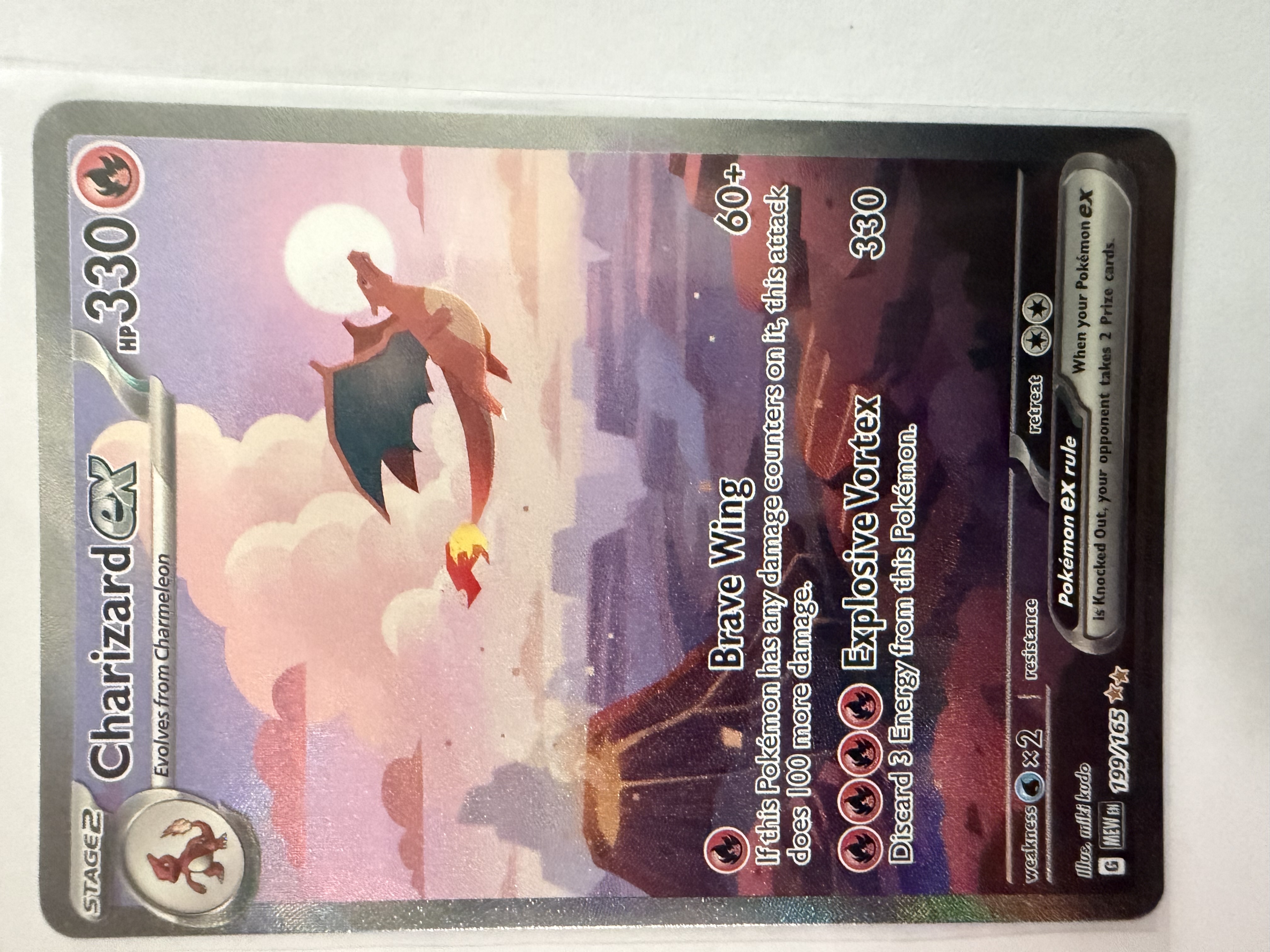
PSA Economy at $50 requires a 2.2x return on a $42 card just to cover the grading fee. Achievable for a genuine gem mint copy, but tight. CGC Bulk at $17 leaves $24.94 in margin before you sell a single card, and the 151 market accepts CGC grades. For cards in the $30 to $100 raw range, CGC is the better submission today.
Charizard ex gold (Obsidian Flames, $21.36 raw): skip it at both companies.
PSA Economy at $50 requires a 3.3x return on a $21 card. CGC at $17 still requires an 81% premium just to break even. Neither clears the bar. Hold it raw or buy a graded copy rather than making one.
Free · No account
Grade your first card free.
No account, no download, no waiting. Photograph the front and the back and get the overall grade back in about a minute.
or get the app


When PSA Is Worth the Extra Cost
Submit to PSA when the card's raw value is high enough that the premium difference covers the cost gap.
Cards where PSA wins clearly: vintage Pokemon (Base Set, Jungle, Fossil, 1st Edition), any card over $200 raw with a deep PSA market, and Japanese-language Pokemon cards where the secondary market strongly prefers PSA labels. The Japanese buyer base weighs heavily toward PSA and the premium there is persistent regardless of what is happening with Value tiers.
For high-value cards already in the PSA pipeline discussion, use Regular or Express. Those tiers are open and their turnaround is competitive.
When CGC Is the Right Call
Modern SV-era and Sword and Shield cards in the $30 to $200 raw range are CGC territory in 2026. The math is clear, the market accepts the label, and the included subgrades make listings more credible to buyers.
CGC also wins on timing. If you need to capture a market window (a newly released set, a player-driven spike), CGC Economy at $20 and 90 working days gets your card back faster than PSA Regular at $79.99 with a longer queue. CGC Bulk at 150 working days misses most hype cycles, but Economy does not.
For the current Mega Evolution Pokemon sets like Ascended Heroes and the recent SV flagship sets, mid-range chase cards in the $40 to $150 raw range are the clearest CGC wins. The brand premium gap has narrowed on these sets specifically.
What Makes No Sense Right Now
Submitting modern raw cards worth under $30 to any professional grading company is hard to justify in late 2026. The fee-to-value math does not work at PSA ($50 minimum) and barely works at CGC ($17 minimum) unless the card has a reasonable shot at a 10 grade.
Pre-screen with ZeroPop before you ship anything. A card that scans at 8.5 across all four axes is not a $50 submission. Surface damage or centering that the AI flags will cost you grade points, and a grade point at submission prices is expensive.
The second skip: do not try to predict a BGS Black Label. BGS Base and Standard tiers were sold out as of the August 2026 data in the cheapest-grading guide (return expected around September 15, so they may be back now; verify at beckett.com). BGS Black Label is the most coveted single grade in Pokemon, but the probability of hitting one on a given submission is low enough that banking on it is not a viable strategy.
Frequently Asked Questions
Is CGC or PSA better for Pokemon cards in 2026?
For modern Pokemon cards worth $30 to $200 raw, CGC at $17 to $20 per card is the better financial choice while PSA's Value tiers remain paused. PSA's cheapest open tier sits at $50, and the market premium gap between a PSA 10 and a CGC 10 on SV-era cards is rarely large enough to cover that difference. For cards over $300 raw, or for vintage and Japanese Pokemon, PSA wins on premium.
When will PSA reopen its cheap grading tiers?
PSA tied Value tier reopening to clearing its backlog to 5 million cards, down from 14 million in June 2026. The company reported 12 million in late June and estimated an October 2026 or early 2027 return under its own projections. Check PSA's backlog tracker directly for the current number. The PSA backlog guide has the full timeline.
Does CGC include subgrades on Pokemon card grades?
Yes, every CGC tier includes four subgrades (centering, corners, edges, surface) at no additional cost. PSA does not include subgrades on a standard label. Those subgrades matter for secondary market buyers who want condition detail and for collectors trying to identify what held back a card's grade before deciding whether to regrade.
What is a CGC 10 worth compared to PSA 10 for Pokemon?
A CGC Pristine 10 on a modern Pokemon card typically sells at 80% to 90% of what an equivalent PSA 10 brings on the secondary market. The gap has narrowed since 2020 and is smallest on SV-era sets. On vintage Pokemon, the PSA premium is wider. Run the math against your card's specific raw value and the fee difference before deciding.
Should I use CGC Bulk or Economy?
CGC Bulk ($17, 25 card minimum, 150 working days) works for cards with durable long-term value where timing does not matter. CGC Economy ($20, 90 working days) is the right call when you need to capture a short market window or want a faster turnaround. The $3 difference per card on a 25 card Bulk submission is $75, which is worth paying if it gets your cards back four months sooner during an active market.
Written by
Marcus ReevesLead Grading Editor, ZeroPop
Marcus has been collecting and grading trading cards since the late 1990s, with a focus on Pokemon, vintage baseball, and modern basketball. He leads ZeroPop's grading research, runs the editorial team's PSA, BGS, and CGC submission tests, and writes the cost and turnaround tracking that powers the app's ROI calculator.
Free · No account
Know your grade before you submit.
ZeroPop scans your cards and gives instant sub-grades for corners, edges, surface, and centering. PSA, BGS, and CGC estimates included. Free to start.
or get the app
Keep reading
PSA vs BGS vs CGC vs SGC: 2026 Grading Comparison
An honest, detailed comparison of every major card grading company (PSA, BGS, CGC, and SGC) covering cost, speed, and market value.
Grading Costs & PricingCheapest Card Grading Services 2026 (Under $10/Card)
The cheapest card grading in 2026, with PSA, Beckett and TAG budget tiers all paused. CGC $17 bulk, AGS $15, SGC, and what each really costs per card.
Grading Company ComparisonsPSA Grading Backlog 2026: What the Value Tier Pause Means for Collectors
PSA's four Value tiers are paused until the backlog clears. The 2026 backlog timeline, current tier pricing, when Value reopens, and where to submit now.
Grading GuidesIs My Card Worth Grading? The Decision Framework
A practical framework for deciding whether to grade your cards. Covers the break-even math, common traps, and the AI pre-grading approach.