Is Riftbound Worth Grading?
Yes, but only on one condition: the copy has to be a real PSA 10 candidate. Across the four Riftbound sets graded so far, a PSA 9 sells for less than a raw card on most of the Signatures we checked, and grading fees just got worse across every major company. The math only works when you already believe the card is a 10, which means checking the card before you pay anyone, not after.
That is the whole thesis of this post, and it is not a hedge. Riftbound is a young game with tiny populations and a hot pull rate on its chase Signatures, which sounds like a grading gold rush. It is not. The difference between a 9 and a 10 is often the difference between a loss and a real profit, and the fastest cheap grading tier just disappeared.
The Pop Report Picture
Akali, Rogue Assassin (Signature) is the newest card in this dataset, and its population tells you everything about where Riftbound grading stands right now.
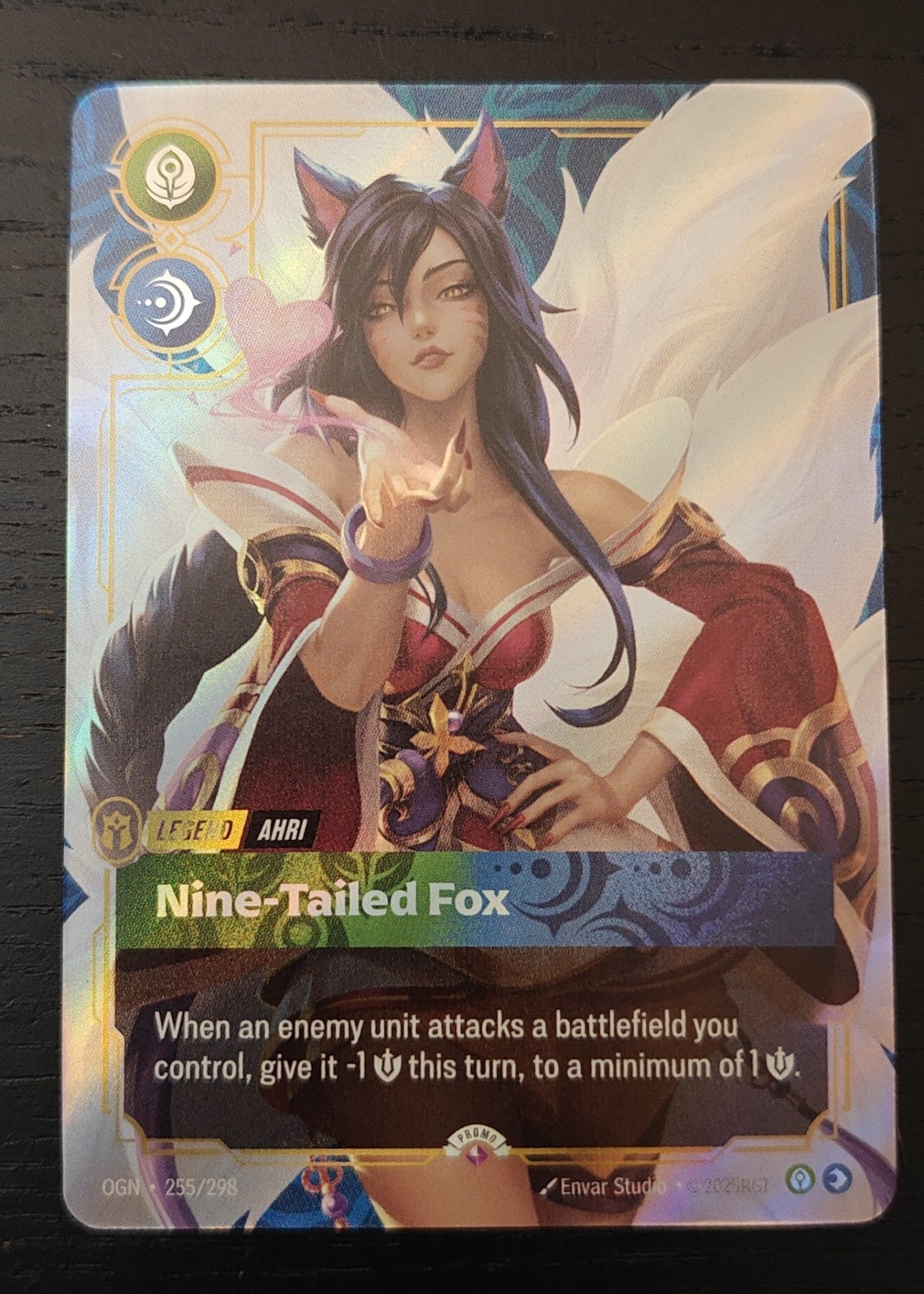
Per GemRate, which mirrors PSA's own submission data as of August 25, 2026, PSA has graded roughly 34,000 Riftbound cards total, and about 70% of that is Origins alone. Here is the set-by-set breakdown:
| Set | PSA Population | Gem Rate (10s) | Released |
|---|---|---|---|
| Origins | 23,655 | 84% (19,979 tens) | Oct 31, 2025 |
| Spiritforged | 8,364 | 91% | Feb 13, 2026 |
| Unleashed | 1,206 | 88% | May 8, 2026 |
| Vendetta | 142 | 92% | July 31, 2026 |
Of that Origins population, 13.2% came back a PSA 9 and under 2% landed at 8 or below. That is a game that grades gem-friendly overall, which sounds like good news until you see what a 9 actually sells for below.
CGC's own population report puts its total Riftbound census at roughly 10,874 across promos and expansions. The English main-set counts run 1,734 for Origins, 1,875 for Spiritforged, 816 for Unleashed, and 315 for Vendetta, with a separate Simplified Chinese population on top. Add the two companies up and collectors are choosing PSA over CGC by roughly 3 to 1 overall.
Vendetta is the set to watch. All 142 of its PSA submissions arrived in the past 30 days, and the game's pace is accelerating: Origins alone runs about 550 new submissions a week, and Unleashed is up 217% month over month. Pops that look small today will not look small in three months.
Zoom into the marquee Signatures and the pattern holds. Kai'Sa, Daughter of the Void 299* sits at a PSA pop of 347 with 298 tens, an 85.9% gem rate. Ahri, Nine-Tailed Fox 303* has a pop of 401 with 358 tens (89.3%). Teemo, Swift Scout 307* sits at 272 with 226 tens (83.1%). Ahri, Inquisitive 227* from Spiritforged has already outpaced all three at a pop of 461 with 428 tens (92.8%). Akali, Rogue Assassin 189* from Vendetta, the newest of the group, has a pop of just 30 with 26 tens (86.7%).
Not every Riftbound card grades this well. The game's single biggest population belongs to an Origins promo, the Ahri Alluring launch card, sitting at 1,176 graded copies but only a 60% gem rate. Event promos handled loose and unsleeved gem far worse than anything pulled from sealed product, where Arcane Box Set cards gem at 97% to 98%. Where the card came from matters as much as what it is.
The Graded vs Raw Math
This is where the "worth grading" question actually gets decided, and PriceCharting's graded columns for Riftbound are thin, usually two or three sales a month on a given Signature, so treat these as directional, not precise. Still, the pattern across dozens of cards is consistent enough to trust.
Where a PSA 10 pays
| Card | Raw | PSA 10 | Multiple |
|---|---|---|---|
| Ahri, Inquisitive Signature (Spiritforged) | $3,500 | $11,000 | 3.1x (very thin sample) |
| Sett Signature | $730 | $2,043 | 2.8x |
| Jinx 301 (non-Signature Overnumber) | $134 | $366 | 2.7x |
| Volibear Signature | $845 | $2,200 | 2.6x |
| Ahri 303 (non-Signature Overnumber) | $405 | $911 | 2.2x |
| Kai'Sa, Daughter of the Void Signature (Origins) | $3,000 | $6,289 | 2.1x |
| Baron Nashor Ultimate foil (Unleashed) | $2,515 | $4,700 | 1.9x |
| Ahri, Nine-Tailed Fox Signature (Origins) | $3,597 | $6,126 | 1.7x |
Every card on this list clears a wide margin over raw at a 10. That margin has to survive a grading fee, a wait, and the real chance the card comes back a 9 instead, which is why the next table matters just as much.
Where it does not pay
| Card | Raw | PSA 10 | Result |
|---|---|---|---|
| Teemo, Swift Scout Signature | $1,949 | $1,694 | Inverted, the 10 trades below raw |
| Lee Sin, Blind Monk Signature | $1,169 | $690 | Inverted |
| Jinx, Loose Cannon Signature | $2,200 | $2,152 | Flat, a loss once you count the fee |
Teemo's inversion is a real quirk: the raw price spiked on three July sales, and the graded market has not caught up. If you own a raw Teemo Swift Scout right now, that spike is the better exit, not a PSA submission.
Now the part that actually decides most submissions: what a 9 does to the same card. Ahri 303 Overnumbered drops from $405 raw to $267 at a PSA 9, a straight loss before fees. Lee Sin Signature drops from $1,169 raw to $611 at a 9, worse than half. Teemo's non-Signature Overnumbered version is a wash even at a 10: $159 raw versus $246 graded, which barely survives the $79.99 PSA fee and does not survive a 9. And Kai'Sa, Survivor alt art sits at $73 raw against $110 at a PSA 10, a gap no grading tier at any price actually clears.
Free · No account
Grade your first card free.
No account, no download, no waiting. Photograph the front and the back and get the overall grade back in about a minute.
or get the app


The PSA 10 Rule
Here is the rule that falls out of every table above: on Riftbound, a PSA 9 usually destroys value against raw, and it is not close. This is the opposite of how grading math works on a lot of older, deeper-pop games, where a 9 still carries a real premium because so few copies exist at any grade. Riftbound's Signatures pull fresh from sealed product at 83% to 93% gem rates, so a 9 reads as underperformance rather than scarcity, and the market prices it that way.
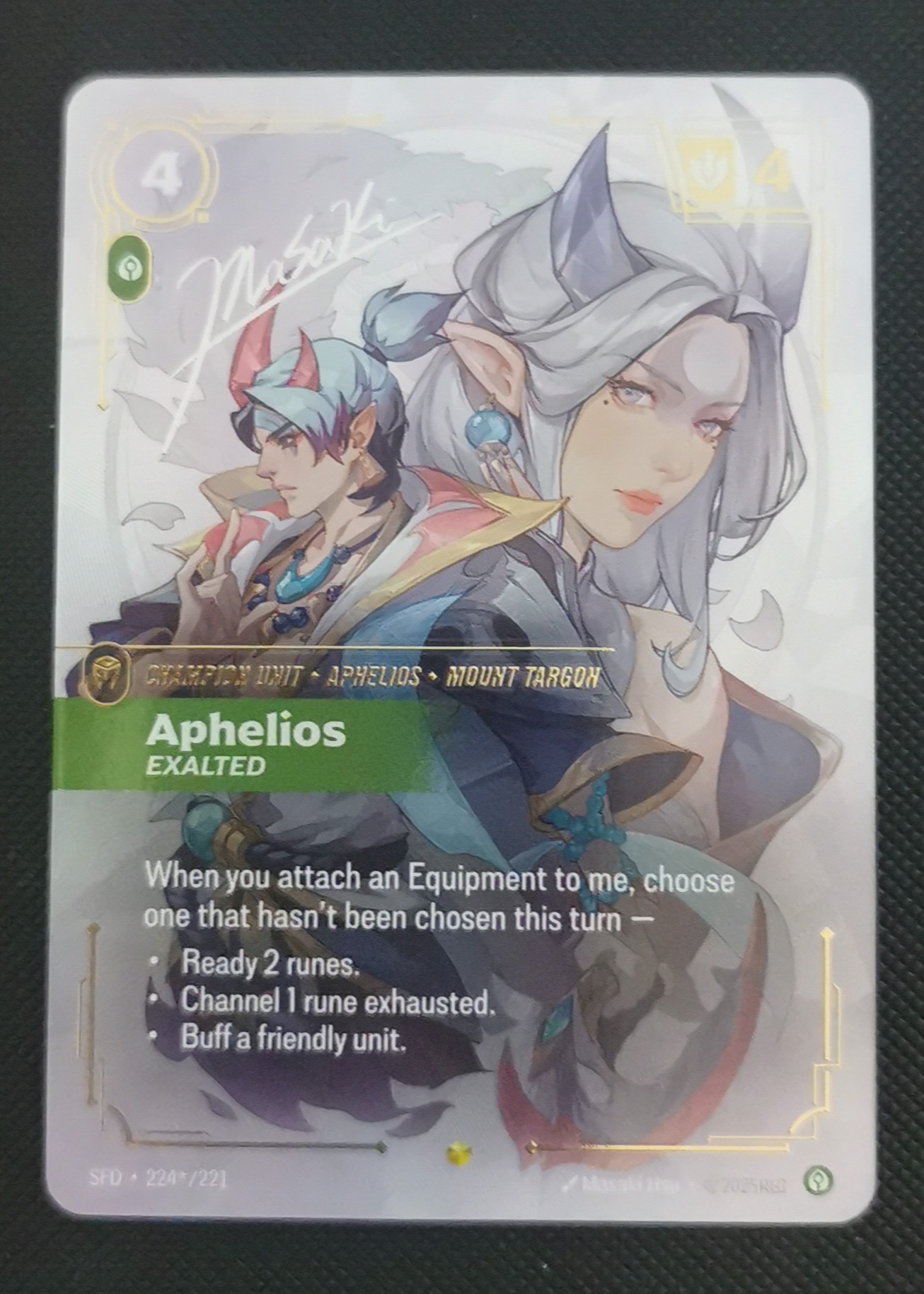
That single fact compresses the entire decision. You are not grading a card, you are grading a coin flip between "this is a 10" and "this loses money," with almost nothing worth having in between. Aphelios, Exalted (Signature) is a useful example of the type: a full-art foil Signature where the surface does all the work, because foil finishes show every scuff a matte card would hide. On a card like that, the corners and edges can look flawless and the grade still lives or dies on one axis.
Sub-$100 cards cannot clear a grading fee under any scenario in this dataset. Above that line, the multiple decides it. Jinx 301 works at $134 raw because its 10 brings 2.7x; Teemo's non-Signature Overnumbered at a similar price is a wash because its 10 brings only 1.55x. Run the multiple on your card, weigh in the real chance of a 9, and the pays table above tells you which side of the line you are on.
The 2026 Fee Reality
The fee environment made this decision harder in August 2026, not easier. PSA has paused its Value tier entirely, citing extraordinary demand, which means the cheapest open PSA service is now Regular at $79.99 a card with a 70 to 80 business day turnaround. Beckett has paused its Base and Standard tiers outright, with a stated reopening of September 15, 2026, and cited submissions up 102% year over year overall and up 159% year over year in TCG specifically. TAG now accepts Riftbound submissions as well, per an announcement on their X account, giving collectors a fourth option.
CGC is the one company still running a genuinely cheap door: Bulk at $17 a card, but it requires a 25-card minimum and a 150 working day wait. Economy runs $20 at 90 days, and Standard runs $55 at 10 days. Net effect: both of the sub-$25 fast tiers that used to make casual Riftbound grading cheap are shut. Cheap grading now means CGC Bulk, a 25-card commitment, and a five-month wait, or paying PSA's $79.99 floor.
That is exactly why pre-grading matters more on Riftbound than it does on a slower-moving game. A four-axis read on corners, edges, surface, and centering from two photos costs nothing and takes a minute, against a fee that just climbed and a turnaround that just got longer. ZeroPop's ROI calculator runs the same raw versus graded math shown above against your own card's numbers before you commit to a submission window measured in months.
What to Grade From Each Set
Start with what the pull rates tell you about scarcity. Per Riot's own collectability breakdown on playriftbound.com, Epic cards land roughly 1 in 4 packs, alt-art champions run about 2 per box, Overnumbered Legends show up in about 1 in 3 boxes, and a Signature lands in roughly 1 in 10 Overnumbereds, which works out to about 1 in 30 boxes. Signatures are the scarce, high-value tier across every set, and the data above shows most of them still clear a real 10 premium.
Grade these. Kai'Sa, Daughter of the Void and Ahri, Nine-Tailed Fox from Origins both clear 1.7x to 2.1x raw at a 10, and their pops (347 and 401) are still small enough that early gems hold value. Sett and Volibear Signatures are cheaper entry points with wider multiples, 2.8x and 2.6x. Ahri, Inquisitive from Spiritforged posted the biggest multiple in this dataset at 3.1x, though the sample is thin enough to treat as a ceiling, not an expectation. Baron Nashor Ultimate foil from Unleashed clears a solid 1.9x. And Akali, Rogue Assassin from Vendetta is the early-mover case: at a PSA pop of just 30 copies, 26 of them tens, anyone submitting a clean copy now is grading into a population that will look very different in six months.
Skip these. Anything under roughly $100 raw, full stop, because no fee tier in this market clears that gap even at a clean 10. Teemo, Swift Scout Signature and Lee Sin, Blind Monk Signature at their current prices, because both invert, the graded 10 sells for less than the raw card. And event promos handled unsleeved, where gem rates run 60% to 77% against 84% to 92% for sealed-product pulls, unless you are looking at a specific copy that is genuinely exceptional and you have already confirmed it under good light.
For a full ranked look at what Vendetta actually shipped, see our Vendetta chase card rankings. And if you are deciding between PSA, BGS, and CGC for a specific card, our PSA vs BGS vs CGC comparison breaks down where each company's strengths actually sit.
The Radiance Window
Radiance releases October 23, 2026, with reveal season starting September 21, roughly 180 cards including 66 showcase treatments. Confirmed Legends so far include Seraphine, Evelynn, Ekko, Ziggs, and Jarvan IV. That gives collectors an eight-week window between now and release where Origins, Spiritforged, Unleashed, and Vendetta pops keep climbing on their own current-set momentum before attention and pull volume shifts to the new set.
That window matters for two reasons. First, populations on the current four sets are growing fast, Origins at 550 submissions a week and Unleashed up 217% month over month, so early gems you already own get diluted every week you wait. Second, once Radiance launches, expect Signature pull odds and early pop dynamics to repeat the pattern set by Vendetta: small pops, a real 10 premium on the strongest chases, and the same trap on everything else. Check the Riftbound grading landing page and the live Riftbound pop report as Radiance pops start posting, because the rule does not change with the set: if the copy is not a likely 10, it is not worth grading.
Frequently Asked Questions
Does PSA grade Riftbound cards?
Yes. PSA has graded roughly 34,000 Riftbound cards as of August 25, 2026, split across Origins (23,655), Spiritforged (8,364), Unleashed (1,206), and Vendetta (142). CGC, Beckett, and TAG all accept Riftbound submissions as well.
How much does it cost to grade a Riftbound card in 2026?
It depends on the company and how fast you need it back. PSA's cheapest open tier is Regular at $79.99 a card with a 70 to 80 business day turnaround, since its Value tier is currently paused for demand. CGC runs $17 for Bulk (25-card minimum, 150 working days), $20 for Economy (90 days), or $55 for Standard (10 days). Beckett's Base and Standard tiers are paused until an expected reopening on September 15, 2026.
What is the gem rate on Riftbound cards?
Origins gems at 84%, Spiritforged at 91%, Unleashed at 88%, and Vendetta at 92%, all per GemRate's mirror of PSA data. That is high for a new game, driven mostly by sealed-product pulls. Event promos handled loose gem far worse, in the 60% to 77% range.
Should I grade a card if I think it's a PSA 9?
Usually no. On the Riftbound Signatures and Overnumbers in this dataset, a PSA 9 typically sells for less than the card's raw value, sometimes by half. Ahri 303 Overnumbered drops from $405 raw to $267 at a 9. Lee Sin, Blind Monk Signature drops from $1,169 raw to $611. Unless your specific card is a strong 10 candidate, grading it into a 9 is usually a loss once you count the fee.
Is CGC's Bulk tier worth the five-month wait?
If you're submitting 25 or more cards you already believe are strong 10 candidates, CGC Bulk at $17 a card is currently the cheapest door into any major grading company, and it is the only sub-$20 option left standing now that PSA's Value tier is paused. The tradeoff is a 150 working day turnaround, so it only makes sense if you are not in a hurry to sell.
What happens to Riftbound grading once Radiance releases?
Expect the same pattern that played out on Vendetta: small early populations, a real premium on the strongest Signature pulls, and the same 9-versus-10 trap on everything else. Radiance releases October 23, 2026, with reveal season starting September 21. Watch pop reports closely in the first weeks after release, since early gems on a new set carry the biggest premium before submission volume catches up.
Written by
Marcus ReevesLead Grading Editor, ZeroPop
Marcus has been collecting and grading trading cards since the late 1990s, with a focus on Pokemon, vintage baseball, and modern basketball. He leads ZeroPop's grading research, runs the editorial team's PSA, BGS, and CGC submission tests, and writes the cost and turnaround tracking that powers the app's ROI calculator.
Free · No account
Know your grade before you submit.
ZeroPop scans your cards and gives instant sub-grades for corners, edges, surface, and centering. PSA, BGS, and CGC estimates included. Free to start.
or get the app
Keep reading
Riftbound Vendetta: The 10 Chase Cards, Ranked
Riftbound Vendetta's 10 most-wanted chase cards ranked by raw price, from Akali's Signature surge to the Crystal Rose promos, with our grading verdict on each.
Grading GuidesIs My Card Worth Grading? The Decision Framework
A practical framework for deciding whether to grade your cards. Covers the break-even math, common traps, and the AI pre-grading approach.
Grading Company ComparisonsPSA vs BGS vs CGC vs SGC: 2026 Grading Comparison
An honest, detailed comparison of every major card grading company (PSA, BGS, CGC, and SGC) covering cost, speed, and market value.