Yu-Gi-Oh Chaos Origins (CORI): Set Guide and Grading
Chaos Origins is the first Core Booster of Series 14, out in the TCG on July 3, 2026 after an OTS Early Access weekend and an April 25 head start in the Japanese OCG. The set rebuilds Yu-Gi-Oh's original light-and-darkness mythology around a reimagined Black Luster Soldier and the Sacred Beasts, and it ships a new frame-breaking Extended Art tier that changes how hard a 10 is to pull. This guide covers what's in the set, the rarity structure, the archetypes, and what actually caps a gem mint grade on Chaos Origins cards.
What Is in Chaos Origins
Chaos Origins is a 100-card Core Booster built around Yami Yugi as cover monster, with the tagline "The forces of light and darkness intertwine, opening the gates of chaos!" It's the Series 14 opener, following Blazing Dominion, and it leans hard into classic Yugi-era monsters getting modern support for the first time.
| Detail | Value |
|---|---|
| Set code | CORI |
| Release (TCG) | July 3, 2026 (OTS Early Access July 1) |
| Release (OCG, Japan) | April 25, 2026 |
| Set size | 100 cards |
| Pack config | 9 cards per pack, 24 packs per box |
| MSRP | About $4.49 per pack |
| Cover monster | Yami Yugi |
| Series | Series 14, first Core Booster |
Nine cards a pack and 24 packs a box puts a booster box at roughly 216 card slots, standard Core Booster math. What's not standard is the rarity ladder stacked on top of that count, which is where this set gets interesting for anyone planning to grade pulls.
The Rarity Ladder
Chaos Origins runs a conventional base spread of 50 Commons, 26 Super Rares, 14 Ultra Rares, and 10 Secret Rares, then adds a premium layer on top: 5 frame-breaking Extended Art cards in the TCG version (only 4 in the Japanese OCG, since the TCG gets an extra exclusive Extended Art card in the Chessmen line), plus 20 more cards printed as Starlight Rares.
Starlight Rares also got a facelift this set. Previous Starlight Rares used a grey outer border around the rainbow foil pattern; Chaos Origins swaps that for a full rainbow foil border and noticeably richer color saturation on the card art itself. Collectors have started calling this "Starlight 2.0" online, though that's a community nickname, not anything Konami has used officially.
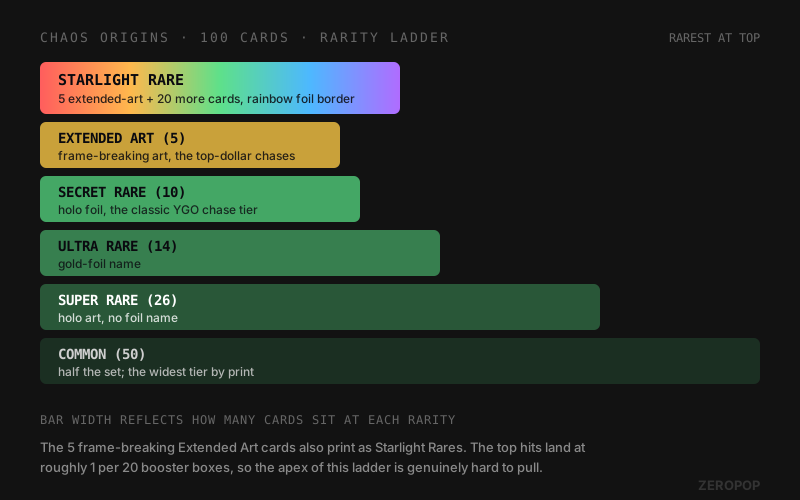
The Extended Art cards are the tier to watch. They break the normal card frame entirely, letting the illustration bleed past where a border would normally sit, and they're the chase layer the whole set is being pulled for. Because Extended Art print runs sit far below the Secret Rare count, early Japanese-market pricing on the top pull is already showing real separation from the rest of the set.
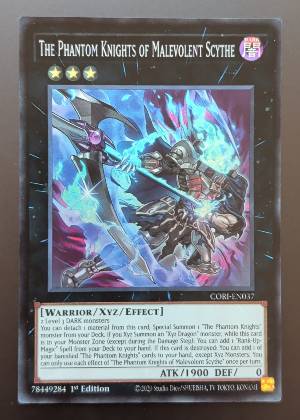
Card images are the property of Konami. ZeroPop is not affiliated with, endorsed by, or sponsored by Konami or Yu-Gi-Oh!, and shows these images for review and commentary. Images via the YGOPRODeck community database.

The Prismatic Secret Rare (Over-Frame) printing of Phara the Primordial Goddess is the card carrying the set right now. It was quoted around $400 in the Japanese market at launch, an early figure worth treating as a snapshot rather than a settled number since TCG copies have barely started trading. Whatever the eventual USD price lands on, Phara is the clearest signal of where collector demand is pointed in this set.
The Archetypes
Chaos Origins is built around four story threads plus one entirely new mechanic, and almost all of them tie back to Yugi's original deck in some way.
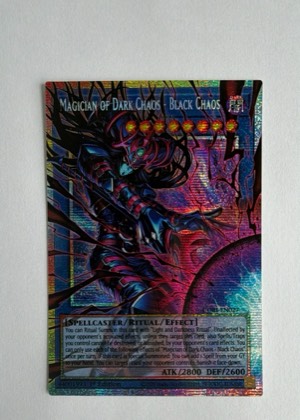
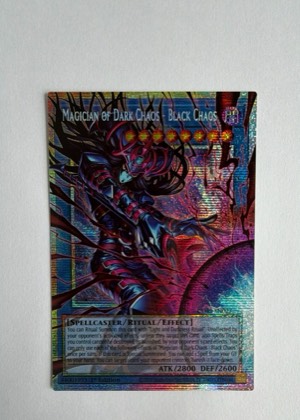
Chaos Ritual is the headline archetype. Black Luster Soldier, Soldier of Light and Darkness and Magician of Dark Chaos, Black Chaos are both reimagined Ritual Effect Monsters, summoned by the shared Ritual Spell Light and Darkness Ritual. These are the cards the set's whole light-and-darkness framing is built around, and they carry the darkest, highest-contrast art in the set.

Classic Yugi support rounds out the nostalgia angle. Summoned Skull gets new utility sending Ritual Spells to the graveyard, Celtic Guardian picks up draw support, and Griffoh is the set's new take on Kuriboh, the same lovable puffball now wearing a Griffore costume with protection and tribute-fodder utility. Griffoh is Kuriboh for this set, not a second character sharing the space.
The Sacred Beasts finally get real modern support. Uria, Lord of Searing Flames, Hamon, Lord of Striking Thunder, and Raviel, Lord of Phantasms are all retrained, and a new Fusion boss, The Chaotic Phantasmal Sacred Beasts, unites all three. This is a GX-era archetype that's waited a long time for a genuine modern push, and Chaos Origins is the set that gives it one.
Blitzclique is the set's new-blood archetype, an EARTH Thunder line built around hand-activated destruction effects, with Surge, Crackle, Whisker, Grain, and Emi Blitzclique as the named pieces.
Chessmen is the set's TCG World Premiere, meaning it debuts here before the OCG gets it. It's a no-Main-Deck Synchro strategy, with King, Rook, Knight, and Pawn pieces shuttling between the Extra Deck and the board around a Chessboard Field Spell. It's also the reason the TCG print run has one more Extended Art card than Japan: a Level 8 Tuner enabler exclusive to the TCG version of the set.
That World Premiere status makes the Chessmen Extended Art card an interesting collecting case on its own. Every other Extended Art in Chaos Origins has an OCG counterpart that's been circulating in Japan since April, giving the market months of head start on pricing and population data. The Chessmen piece has none of that. It's a TCG-only print with no Japanese sales history to reference, which puts it in the same early, thin-data category as any true world premiere, worth watching once the first graded population numbers start coming in.
Free · No account
Grade your first card free.
No account, no download, no waiting. Photograph the front and the back and get the overall grade back in about a minute.
or get the app


Grading Chaos Origins
Yu-Gi-Oh grading skews PSA by a wide margin, with CGC a real and growing second choice (CGC is notable for grading front and back centering as separate numbers rather than one blended score). BGS is a distant third in this market. On Chaos Origins specifically, four things stand between a raw pull and a gem mint slab.
Centering. Yu-Gi-Oh cards are small, 59 by 86 millimeters against a Pokemon or sports card's larger frame, so the same physical cutting shift reads as a much bigger error against a tighter border. A shift that would pass on a larger card can visibly throw off a Yu-Gi-Oh centering read.
Edge whitening on dark borders. The headline chases in this set (Black Luster Soldier, Magician of Dark Chaos, Summoned Skull, and all three Sacred Beasts) run heavy black and near-black borders. Any nick from the cutting process shows up instantly against that dark background, more than it would on a card with a lighter or busier border.
Secret Rare and Extended Art foil surface. The holo and prismatic finishes on Chaos Origins' top tiers cut both ways. They can mask small flaws under flat lighting, but tilt the card and print lines, waves, and micro-scratches on the foil surface show up clearly. This is the axis most likely to surprise a submitter who only checked the card under one light.
Starlight Rare rainbow-foil texture. The new "Starlight 2.0" treatment adds raised rainbow foil across a richer color base, and that raised texture is unforgiving of scratches in a way the older grey-bordered Starlight finish wasn't as prone to showing.
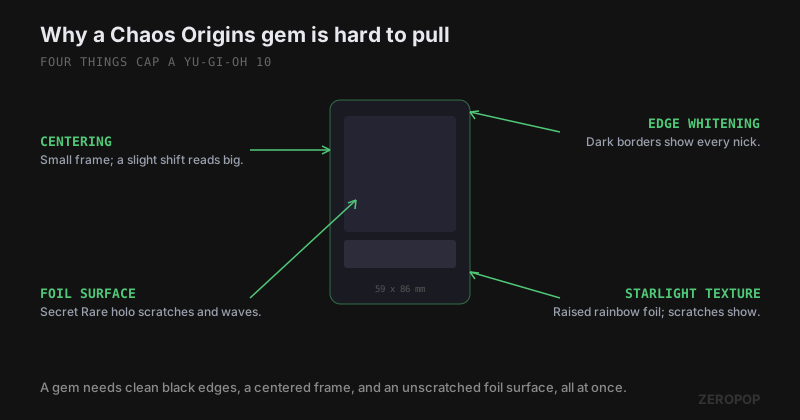
Because three of those four risks only show under angled light, scanning a pull before you submit catches more on this set than it would on a plainer, bordered release. A card that looks flawless under a phone flashlight straight-on can reveal a print line the moment you tilt it 30 degrees, and that's exactly the kind of miss that turns a submission into a wasted fee. For how the major graders differ on turnaround, cost, and sub-grade treatment, see PSA vs BGS vs CGC.
None of this is unique to Yu-Gi-Oh in principle. Foil-heavy chases across every TCG punish the same angled-light blind spot, and the small-card centering problem has a real parallel in how tightly Bandai cuts One Piece cards. See the One Piece TCG grading guide for how a different game's graders handle a similarly unforgiving centering tolerance.
What to Chase and Grade
The value in Chaos Origins sits almost entirely in the Extended Art and Starlight layers, and those are exactly the cards hardest to land a 10 on. Phara the Primordial Goddess in Prismatic Secret Rare (Over-Frame) is the top-dollar pull right now, with that early Japanese-market figure near $400 giving the clearest read on where the ceiling sits until TCG sales data catches up. Everything past that is still an estimate; this is a set that released yesterday, and USD prices are thin and moving.
The practical approach is the same one that works on every hot new release. Scan a pull under multiple light angles before deciding whether to submit, since the surface and foil-texture risks on this set specifically hide under flat lighting and appear at an angle. Cards with visible edge nicks on the dark-bordered chases or any raised-foil scratching on a Starlight are sell-raw candidates, not submission candidates, no matter how good the front looks head-on. For the broader math on when a card clears its grading fee, see is my card worth grading. For a ranked breakdown of every chase in this set with per-card grading notes, see Chaos Origins chase cards ranked.
Frequently Asked Questions
When did Chaos Origins release?
Chaos Origins released in the TCG on July 3, 2026, with an OTS Early Access weekend on July 1. It released earlier in the Japanese OCG, on April 25, 2026.
What is the set code and size for Chaos Origins?
The set code is CORI. It contains 100 cards across Commons, Super Rares, Ultra Rares, Secret Rares, plus the Extended Art and Starlight Rare premium layers.
What is the chase card in Chaos Origins?
Phara the Primordial Goddess, printed as a Prismatic Secret Rare in the Over-Frame (Extended Art) treatment, is the set's headline chase. It was quoted around $400 in the Japanese market at launch, an early estimate rather than a settled TCG price.
What is an Extended Art or Over-Frame card?
Extended Art (also called Over-Frame) cards break the normal card border, letting the illustration extend past where a standard frame would sit. Chaos Origins has 5 of these in the TCG (4 in the Japanese OCG, with the TCG's extra copy belonging to the Chessmen archetype), and 20 additional cards printed as Starlight Rares with a rainbow foil border.
Is Chaos Origins worth grading?
The Extended Art and Starlight Rare cards are the ones worth the submission fee, since that's where the set's value concentrates. Commons and base Super Rares are not worth grading. Check centering carefully given the small Yu-Gi-Oh card size, inspect the dark borders on cards like Black Luster Soldier for edge whitening, and scan foil surfaces under angled light before committing to a submission.
Should I use PSA or CGC for Yu-Gi-Oh cards?
PSA is the dominant grader for Yu-Gi-Oh by volume and remains the default choice for most submitters. CGC is a strong and growing second option, and it's notable for scoring front and back centering separately rather than blending them into one number, which some collectors prefer for a set like this where centering is a real risk. BGS is a distant third in the Yu-Gi-Oh market.
Live community scans
Cards from Chaos Origins on ZeroPop
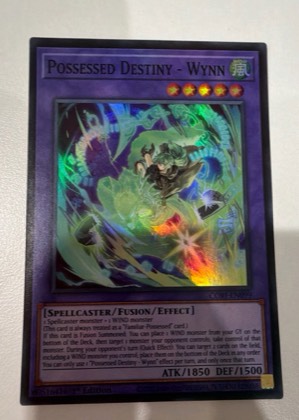
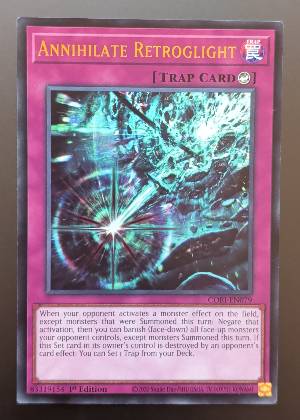
Real scans and prices from the community grade database. Tap a card for its grade population and price history, or use Shop on eBay under it to find that card there.
As an eBay Partner Network affiliate, ZeroPop may earn a commission when you buy through eBay links on this page.
Written by
Marcus ReevesLead Grading Editor, ZeroPop
Marcus has been collecting and grading trading cards since the late 1990s, with a focus on Pokemon, vintage baseball, and modern basketball. He leads ZeroPop's grading research, runs the editorial team's PSA, BGS, and CGC submission tests, and writes the cost and turnaround tracking that powers the app's ROI calculator.
Free · No account
Know your grade before you submit.
ZeroPop scans your cards and gives instant sub-grades for corners, edges, surface, and centering. PSA, BGS, and CGC estimates included. Free to start.
or get the app
Keep reading
Yu-Gi-Oh Chaos Origins: The 10 Chase Cards, Ranked
The 10 Chaos Origins (CORI) chase cards ranked, from the Over-Frame Phara grail to the reimagined Black Luster Soldier, with a grading read on each.
Grading Company ComparisonsPSA vs BGS vs CGC vs SGC: 2026 Grading Comparison
An honest, detailed comparison of every major card grading company (PSA, BGS, CGC, and SGC) covering cost, speed, and market value.
Grading GuidesIs My Card Worth Grading? The Decision Framework
A practical framework for deciding whether to grade your cards. Covers the break-even math, common traps, and the AI pre-grading approach.
Grading GuidesOne Piece TCG Grading 2026: PSA, CGC & What Sells
Everything One Piece TCG collectors need to know about grading in 2026. PSA vs CGC for OPCG, manga rare and alt-art chase pricing, common defects, and submission strategy.