Yu-Gi-Oh Chaos Origins: The 10 Chase Cards, Ranked
Phara the Primordial Goddess is the card everyone is chasing out of Chaos Origins, an Over-Frame extended art already quoted around $400 in the Japanese market at launch. Chaos Origins (CORI) is the first Core Booster of Yu-Gi-Oh Series 14, released in the TCG on July 3, 2026 after debuting in Japan back on April 25. It runs 100 cards, and the premium layer is what makes this set worth talking about: 5 frame-breaking Extended Art cards, printed in Japan as Prismatic Secret Rare "Over-Frame" cards, plus 20 Starlight Rares upgraded this set with a new rainbow foil border. Pull rates on the top hits sit around 1 in 20 boxes. The full chase roster below runs 10 to 1, with a grading read on each.
Sourcing and Price Notes
Card images are the property of Konami. ZeroPop is not affiliated with, endorsed by, or sponsored by Konami or Yu-Gi-Oh!, and shows these images for review and commentary. Images via the YGOPRODeck community database.
TCG prices below are one day old at most and will move. Treat every USD figure here as a thin, early estimate, not a settled market; Japanese pricing has a two month head start but is still finding its floor as Western demand layers on top of it.
The 10 Chase Cards, Ranked
10. Summoned Skull (Super Rare / Ultra Rare, Premium Treatment)
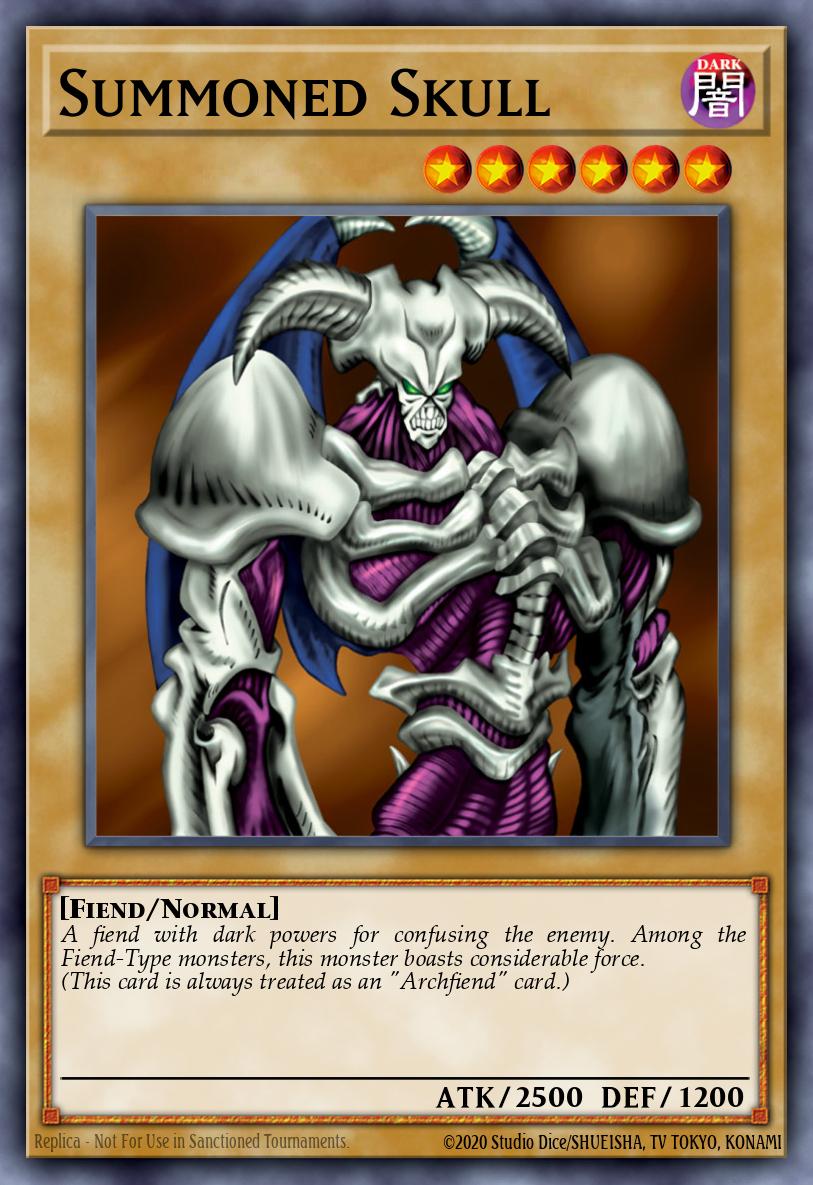
Yami Yugi's ace monster returns inside the new Chaos Ritual engine, which sends Ritual Spells straight to the Graveyard to fuel its plays, real deckbuilding relevance layered on top of pure nostalgia. Chaos Origins gives Summoned Skull a fresh premium treatment, and retro plus new foil always sells. It is also the version worth a submission fee, since a standard-frame reprint will never carry the same slab premium.
9. Griffoh, the new Kuriboh (Ultra Rare)

A Kuriboh dressed in a Griffore costume is exactly the kind of novelty card that punches above its playability, and it ties into the classic-Yugi support package this set leans on. Collectors who would never touch a Kuriboh otherwise want this one for the joke alone. The frame is lighter than most of this list, so holo surface scratches and centering are the bigger risk here than whitening, and corners still cap the gem grade if the pull comes with any handling damage straight out of the pack.
8. Aleister the Reminiscent (Secret Rare)

A new Invoked-style ritual support Spellcaster with broad deckbuilding appeal across multiple archetypes. Cards that slot into more than one deck hold value past the initial hype window, and Aleister reads as exactly that kind of staple. Standard Yu-Gi-Oh centering and edge-whitening checks apply here, plus the usual foil surface risk that comes with any Secret Rare finish; nothing exotic, but nothing forgiving either.
7. Surge Blitzclique (Secret Rare)

The face of the new EARTH Thunder Blitzclique archetype and its top hand-activated destruction piece. If the deck lands competitively once the format settles, this is the collector pick that carries the archetype's demand. Bright Thunder-type art makes small edge whitening and centering misses more visible than on a darker card, and the foil surface on both the Secret and Starlight printings scratches easily straight out of the pack.
6. The Sacred Beasts: Uria, Hamon, and Raviel (Secret Rares)

The GX-era trio finally gets real modern support, and the enhanced singles are strong collector targets on their own. Raviel, Lord of Phantasms is the clear fan favorite, but completing all three at high rarity is a natural set-completion goal. Centering is the axis to watch beyond the whitening risk common to this set's dark frames, since the busy border art on all three makes an off-center cut obvious.
5. Chessmen (TCG-Exclusive Extended Art)
The Chessmen Extended Art is a World Premiere card, brand new to this printing, and it is not yet indexed in card image databases. No image is available for this entry yet.
Chessmen is the set's genuine surprise: a no-Main-Deck Synchro strategy where pieces shuttle around a Chessboard Field Spell, a mechanic nobody has seen before in this game. The TCG-only Extended Art version, a Level 8 Tuner enabler for the whole strategy, is chased by players and collectors alike since it never appeared in the Japanese printing. No grading history exists yet for this specific Extended Art treatment; scan it, sleeve it, and watch how the first wave of submissions come back before assuming anything about its gem odds. Too early to price: a World Premiere Extended Art with no Japanese comparable and no TCG sales history yet is a pure wait-and-see situation.
Free · No account
Grade your first card free.
No account, no download, no waiting. Photograph the front and the back and get the overall grade back in about a minute.
or get the app


4. The Chaotic Phantasmal Sacred Beasts (Fusion, Ultra Rare / Secret Rare / Extended Art)

The new Fusion boss that unites Uria, Hamon, and Raviel into one card, and the actual payoff for the whole Sacred Beasts push this set builds around, priced above the individual Sacred Beast singles as the archetype's payoff. It is a big-art GX centerpiece that anchors a binder page on its own. Large, busy holo art shows scratches and print lines badly once foil is involved, since this card has a lot of surface for a flaw to land on, on top of the edge whitening risk common to this set's dark frames.
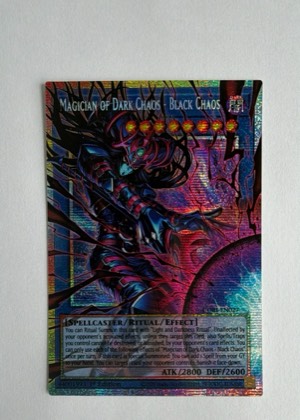
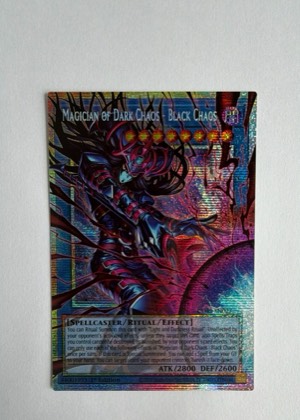
3. Magician of Dark Chaos, Black Chaos (Secret Rare / Extended Art)

The light-and-dark counterpart to Black Luster Soldier, a reimagined Ritual Effect Spellcaster summoned by the same Light and Darkness Ritual. This is the second half of the set's signature chase pair, and collectors buying one usually buy both; early Japanese-market figures put this just behind Black Luster Soldier itself. Foil scuffing on the extended art finish caps the gem grade here even on an otherwise clean pull, on top of the whitening risk shared by this set's dark frames.
2. Black Luster Soldier, Soldier of Light and Darkness (Secret Rare / Extended Art)

The set's marquee nostalgia reimagining, a Ritual Effect Black Luster Soldier tied to the new Light and Darkness Ritual and carrying some of the deepest nostalgia in the game. The frame-breaking Extended Art printing is a headline collectible on its own, independent of what the card does in a deck, and early Japanese-market listings place it near the top of the set, just behind Phara. The extended-art foil scratches easily under handling, and near-black borders make edge whitening the top gem-killer here, same as elsewhere in this dark-bordered set.
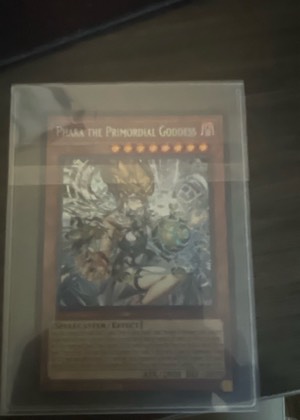
1. Phara the Primordial Goddess (Prismatic Secret Rare, Over-Frame Extended Art)

The true grail of Chaos Origins: a brand-new, generically splashable disruption monster whose frame-breaking Over-Frame extended art is the single top-dollar pull in the set, already quoted around $400 in the Japanese market at launch. Real playability across a wide range of decks plus a genuinely striking extended art treatment makes this the card everybody actually wants, not just the card with the biggest number attached. The extended-art foil surface is scratch-prone, and the premium texture itself is the gem cap here more than any single defect type; edge whitening and centering both need to check out clean, but surface is where a promising pull most often loses the 10. Around $400 raw in the early Japanese market, this is the one figure in this set with real footing, and still the top-dollar chase as the TCG catches up. Scan it carefully before you ever consider grading, given how much a single surface defect can cost against that price.
The ZeroPop Verdict: What to Grade First
The Over-Frame and Starlight chases carry almost all the value in Chaos Origins, and they are also the hardest gems in the set to pull off. Summoned Skull, the Sacred Beasts trio, the Chaotic Phantasmal Sacred Beasts, Magician of Dark Chaos, and Black Luster Soldier all print on near-black or dark frames, where edge whitening shows as a pale line against black long before it would register on a lighter card, and busy border art makes an off-center cut easy to spot too. A true gem on any of these needs clean black edges with no visible whitening plus centering at 55/45 or better, a tighter bar than it looks in hand. Foil surface scratches easily on every Secret Rare and Extended Art finish in this set straight out of the pack, so whitening and surface work against you on nearly every card ranked here, not just Black Luster Soldier and Phara.
PSA is the default grader for anything here that clears low triple digits raw, given its deeper secondary market for Yu-Gi-Oh Secrets and Over-Frame cards. CGC is worth a look for mid-tier Secrets and Ultras where the fee-to-value math is tighter. See PSA vs BGS vs CGC for the full breakdown.
Whatever grader you pick, scan the four sub-grades, corners, edges, surface, and centering, before you submit anything. Prices across this list are early estimates, and a scan-confirmed gem is worth chasing even while the market settles; a scan-confirmed problem area is not worth a submission fee at any price. Run the math with is my card worth grading, and read the full Chaos Origins set guide for the complete checklist and pull rates.
Frequently Asked Questions
What is the most valuable Chaos Origins card?
Phara the Primordial Goddess, in its Prismatic Secret Rare Over-Frame extended art printing, leads the set. It is quoted around $400 in the early Japanese market, and that figure has the most footing of any price in this set so far. TCG week-one pricing is still catching up to that number.
What is an Over-Frame or Extended Art card?
Over-Frame is Konami's Japanese term for a frame-breaking extended art treatment, where the illustration extends past the normal card border. Chaos Origins ships 5 of these, printed in the TCG as Extended Art cards and in Japan as Prismatic Secret Rares. They sit alongside the set's 20 Starlight Rares, a rainbow foil border new to this printing, as the two premium chase tiers.
When did Chaos Origins release?
Chaos Origins (CORI) released in Japan on April 25, 2026, and in the TCG on July 3, 2026. It is the first Core Booster of Yu-Gi-Oh Series 14 and runs 100 cards.
Is Black Luster Soldier worth grading?
Yes, if it scans clean. The Extended Art Black Luster Soldier carries deep nostalgia demand and an early price near the top of the set. The near-black border makes edge whitening the biggest risk to a gem grade, so scan before you submit rather than assume a pack-fresh pull is automatically clean.
PSA or CGC for Yu-Gi-Oh?
PSA carries the deepest secondary market and the strongest multipliers for Yu-Gi-Oh Secrets, Over-Frame cards, and Starlight Rares once raw value clears low triple digits. CGC is a reasonable option for mid-tier Ultras and Secrets where the submission fee needs to stay proportional to the card's value. See PSA vs BGS vs CGC for the full comparison.
Are Chaos Origins cards worth grading yet?
Some are, but treat every price here as a thin, early estimate. TCG week-one prices are still forming, and Japanese figures, even a strong anchor like Phara's, are still settling as Western demand layers on. Scan first, check is my card worth grading for the break-even math, and let the numbers firm up before committing to expensive submissions.
Live community scans
Cards from Chaos Origins on ZeroPop
Real scans and prices from the community grade database. Tap a card for its grade population and price history, or use Shop on eBay under it to find that card there.
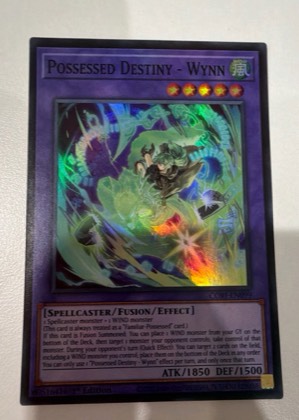
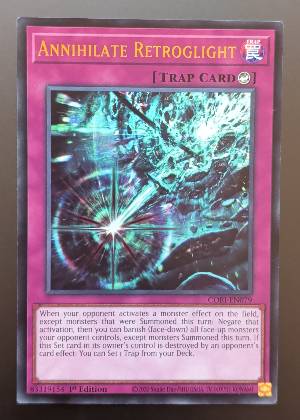
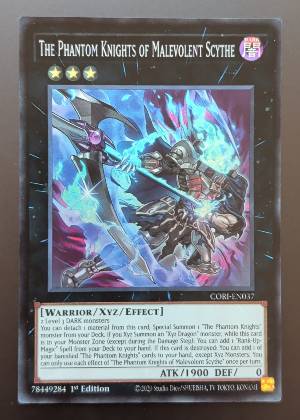
As an eBay Partner Network affiliate, ZeroPop may earn a commission when you buy through eBay links on this page.
Written by
Marcus ReevesLead Grading Editor, ZeroPop
Marcus has been collecting and grading trading cards since the late 1990s, with a focus on Pokemon, vintage baseball, and modern basketball. He leads ZeroPop's grading research, runs the editorial team's PSA, BGS, and CGC submission tests, and writes the cost and turnaround tracking that powers the app's ROI calculator.
Free · No account
Know your grade before you submit.
ZeroPop scans your cards and gives instant sub-grades for corners, edges, surface, and centering. PSA, BGS, and CGC estimates included. Free to start.
or get the app
Keep reading
Yu-Gi-Oh Chaos Origins (CORI): Set Guide and Grading
Yu-Gi-Oh Chaos Origins (CORI) hit July 3, 2026: the Series 14 opener with reimagined Black Luster Soldier, Sacred Beasts, and new Extended Art chases to grade.
Grading GuidesIs My Card Worth Grading? The Decision Framework
A practical framework for deciding whether to grade your cards. Covers the break-even math, common traps, and the AI pre-grading approach.
Grading Company ComparisonsPSA vs BGS vs CGC vs SGC: 2026 Grading Comparison
An honest, detailed comparison of every major card grading company (PSA, BGS, CGC, and SGC) covering cost, speed, and market value.
Grading GuidesBest Cards to Grade in 2026: Top ROI Picks
The 12 cards most worth grading in 2026 across Pokémon, baseball, football, basketball, and MTG. Ranked by PSA 10 premium and grading-cost ROI.