Pokemon Card Price Movers (July 2026): What Climbed and What Cooled
Mid-July 2026 was a cooling week for Pokemon singles, not a rally. In the week ending July 5, four of the five biggest movers were down, with the Rayquaza VMAX alt art from Evolving Skies the lone standout gainer at about 11.9 percent, while several Scarlet and Violet 151 chases and recent-set secret rares gave back gains from earlier peaks. This is a snapshot of a fast-moving market, so treat every number here as a read on the week of July 5, 2026, not a permanent price, and read each mover through the one lens a price ticker never gives you: whether the card is actually worth grading.
The market this month, in one paragraph
The theme is correction, not collapse. The cards that moved were collector-driven special illustration rares, secret rares, and gallery pulls, not competitive staples, which tells you this is hype money rotating rather than the format shifting under anyone's feet. Scarlet and Violet 151 was the epicenter again, supplying two of the five biggest movers as its most-chased cards pulled back from spring highs. Attention is also being drawn forward: the Mega Evolution Pitch Black set lands July 17, and pre-release energy tends to pull spend toward sealed product and the incoming Mega Darkrai ex chase rather than into a month-old secret rare (our Pitch Black chase guide covers what is coming). Underneath the weekly noise, the single most durable category remains Japanese-exclusive promos, which have climbed steadily for two years on genuinely thin populations.
The biggest movers, week ending July 5
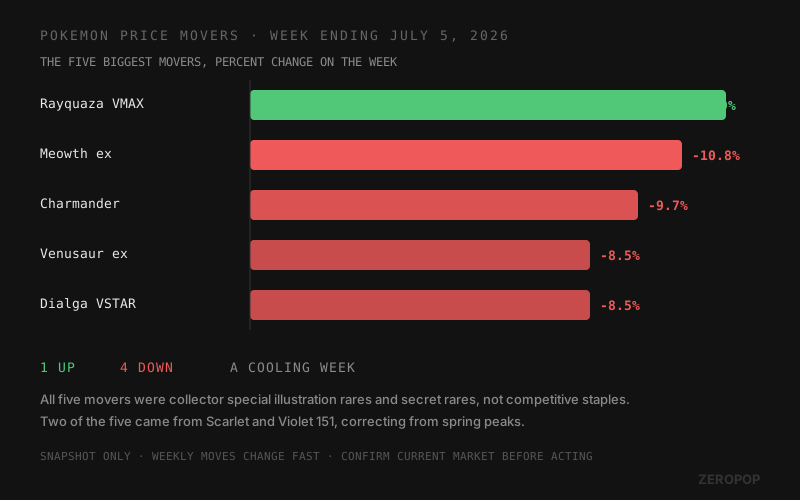
| Card | Set | Move | Read |
|---|---|---|---|
| Rayquaza VMAX (alt art) | Evolving Skies | up ~11.9% | The week's one real gainer; a durable long-term chase |
| Meowth ex | Perfect Order (ME03) | down ~10.8% | Post-release hype giving back, not fundamental weakness |
| Charmander | Scarlet and Violet 151 | down ~9.7% | Correcting from a recent peak; still deck-playable |
| Venusaur ex | Scarlet and Violet 151 | down ~8.5% | Same 151 cooldown |
| Origin Forme Dialga VSTAR | Crown Zenith | down ~8.5% | A Crown Zenith secret pulling back |
Rayquaza VMAX: the one that went up, and why it can be graded
The Rayquaza VMAX alt art from Evolving Skies is one of the most beloved modern chase cards in the hobby, and it was the only major mover in the green this week. Evolving Skies has been out of print long enough that both sealed and its top singles have trended up as supply thins, and the Rayquaza alt art is the card that demand concentrates on. A roughly 12 percent weekly move on a card with that kind of long-term floor is the healthiest signal on this list.
It is also a genuine grading candidate, which is the part a price feed will not tell you. The raw-to-PSA-10 gap on this card is wide enough to justify a submission fee when the card cooperates, but the alt art's dark, textured background is the catch. That surface shows every scratch and print line under raking light, and centering on the full-art frame is tight, so surface and centering are the two axes that decide a 10 here. Scan it at multiple angles first; if the surface reads clean, this is one of the few cards on the list where grading math clearly works. See is my card worth grading for the break-even framing.
The Scarlet and Violet 151 cooldown
Two of the five movers came from Scarlet and Violet 151, and both were down. Charmander (168/165) slid about 9.7 percent, correcting from a recent peak, though it keeps a demand floor because it still sees play in Charizard ex decks. Venusaur ex (198/165) gave back about 8.5 percent in the same cooldown. This is the classic post-hype stabilization pattern: a set produces a run of chase cards, prices overshoot on release energy, and then the most-traded ones settle back toward a real floor over the following months.
For grading, the 151 subset is a centering story before anything else. The white-bordered art shows off-center borders and edge whitening more plainly than a full-bleed card, so centering and edges are the axes that cap these at a 10. In a cooling market, the risk is doubled: the PSA 10 population on a hyped set builds quickly, and a falling raw price plus a rising population compresses the grading premium from both directions at once. Treat these as flip-or-hold right now unless a specific copy is a clear centering standout.
Free · No account
Grade your first card free.
No account, no download, no waiting. Photograph the front and the back and get the overall grade back in about a minute.
or get the app


Meowth ex, Dialga VSTAR, and reading a post-hype dip
Meowth ex from Perfect Order was the week's biggest faller at about 10.8 percent, and Origin Forme Dialga VSTAR from Crown Zenith gave back about 8.5 percent. Neither move looks like a card losing relevance. Meowth ex is a fresh-set secret rare cooling off its release spike, and the Dialga is a Crown Zenith chase from a set that has held up well overall, fluctuating within a healthy range rather than breaking down.
The grading verdict on a fresh-set secret rare like Meowth ex is caution. The PSA 10 population on a card this new is still being built, so the premium a graded copy commands today can shrink meaningfully over the next few months as more 10s hit the market. That is a different situation from an aged card like the Rayquaza, where the population is largely set. When the raw price is falling and the graded population is climbing, the safest move is to wait for the price to find a floor before committing a submission fee.
What is actually worth grading in a cooling week
A down week is not a reason to stop grading, it is a reason to grade more selectively. The pattern across this list is clear: the cards worth submitting are the ones with a durable, aged demand base and a wide raw-to-10 gap, and the cards to hold are the fresh-set chases whose graded populations are still filling in.
- Grade the aged, high-demand chases if the surface passes. The Rayquaza VMAX alt art is the template here: long-term floor, wide grading gap, a stable population. Scan the surface and centering first, because on a dark full-art card those are the two axes that decide the grade.
- Hold the fresh-set secret rares. Meowth ex and the 151 chases are still building their PSA 10 populations. A falling raw price plus a rising graded supply compresses the premium from both sides, so let the price find its floor first.
- Do the break-even math before every submission. In a cooling market the margin between a raw sale and a graded sale is thinner, which makes the grading fee a bigger share of your profit. Our guide to pricing a trading card and whether a card is worth grading both walk through the numbers.
Japanese promos: the trend under the weekly noise
Zoom out from the week and the most durable story in Pokemon pricing is not any single spike, it is the sustained two-year climb in Japanese-exclusive promos. Pokemon Center birthday promos, regional event cards, and other limited-channel Japanese releases share the one trait every reliable riser on this list also has: a genuinely thin population relative to demand. These do not usually appear on a weekly percentage-mover list because they move slowly and steadily rather than in spikes, but they are the category that has rewarded patience most consistently, and they are worth grading precisely because their populations stay small.
How to read a price spike before you act on it
A single week's percentage move is a starting point, not a verdict. A card up 12 percent on thin volume can round-trip the next week, and a card down 10 percent from a hype peak can still be sitting well above where it started the year. Before you treat any mover as a buy or a grade, check three things: whether the move is on real volume or a couple of outlier sales, whether the card has an aged population or a fresh one still building, and which of the four sub-grades actually caps that specific card. That last one is the piece a price feed never shows you, and it is the difference between a submission that clears its fee and one that does not.
Frequently Asked Questions
What was the biggest Pokemon price mover in July 2026?
In the week ending July 5, 2026, Rayquaza VMAX alt art from Evolving Skies was the standout gainer at roughly 11.9 percent, and it was the only major mover in the green. The biggest faller was Meowth ex from Perfect Order at about 10.8 percent. These are weekly snapshots and change quickly, so always confirm current numbers before acting.
Why did the Scarlet and Violet 151 cards drop?
They were correcting from earlier highs, not losing long-term demand. Charmander and Venusaur ex both gave back gains as release-driven hype cooled, which is a normal post-hype stabilization pattern. Charmander in particular keeps a demand floor because it still sees competitive play in Charizard ex decks.
Is a cooling market a bad time to grade cards?
Not necessarily, it is a time to grade more selectively. Aged cards with a wide raw-to-PSA-10 gap and a stable population, like the Rayquaza VMAX alt art, still justify a submission when the surface and centering pass. Fresh-set secret rares whose graded populations are still building are the ones to hold until prices find a floor.
Which Pokemon cards hold value best over time?
Historically, the most durable risers share one trait: a thin population relative to demand. Japanese-exclusive promos, out-of-print alt arts like Rayquaza VMAX, and secret rares from sets that have fully aged out tend to hold value better than fresh-set chases still in print. Population is the single best predictor of a durable floor.
How do I know if a price-mover card is worth grading?
Check the raw-to-PSA-10 gap, whether the graded population is aged or still building, and which sub-grade caps that specific card. A wide gap plus a stable population is the green light; a narrow gap or a fast-building population is the reason to hold. Scanning the card first tells you the four sub-grades before you pay a grading fee. See our guide to whether your card is worth grading for the full math.
Where do these price-mover numbers come from?
The weekly percentage moves are drawn from public market-tracking sources for the week ending July 5, 2026, and reflect recent sales activity, not a fixed price. Card prices move constantly, so use these as a directional read on what is hot and what is cooling, and confirm the current market before you buy, sell, or submit a card for grading.
Written by
Marcus ReevesLead Grading Editor, ZeroPop
Marcus has been collecting and grading trading cards since the late 1990s, with a focus on Pokemon, vintage baseball, and modern basketball. He leads ZeroPop's grading research, runs the editorial team's PSA, BGS, and CGC submission tests, and writes the cost and turnaround tracking that powers the app's ROI calculator.
Free · No account
Know your grade before you submit.
ZeroPop scans your cards and gives instant sub-grades for corners, edges, surface, and centering. PSA, BGS, and CGC estimates included. Free to start.
or get the app
Keep reading
Disney Lorcana Price Movers, June 2026: The 10 Cards Spiking
Buzz Lightyear hit a $16,000 PSA 10 in weeks. The 10 biggest Disney Lorcana price movers of June 2026, what is driving them, and which actually hold a 10.
PokemonPrismatic Evolutions Chase Cards: The Grading Risk Guide
Prismatic Evolutions chase cards ranked by price, with real PSA 10 population data and the grading risk on every Eeveelution Special Illustration Rare.
PokemonPokemon TCG Journey Together: The 10 Chase Cards, Ranked
The 10 Journey Together chase cards ranked, from Lillie's Clefairy ex to the gold Hyper Rares, with a PSA 10 grading read on every Special Illustration Rare.
Grading GuidesPokemon Cards Worth Grading in 2026: Top Targets
Which Pokemon cards are actually worth grading in 2026. Vintage, modern, Japanese, and Prismatic Evolutions chase cards ranked by PSA 10 ROI.
Grading GuidesIs My Card Worth Grading? The Decision Framework
A practical framework for deciding whether to grade your cards. Covers the break-even math, common traps, and the AI pre-grading approach.